

Park Model RVs vs. Destination Trailers:
Understanding the Difference and Why Foundation Stands Out
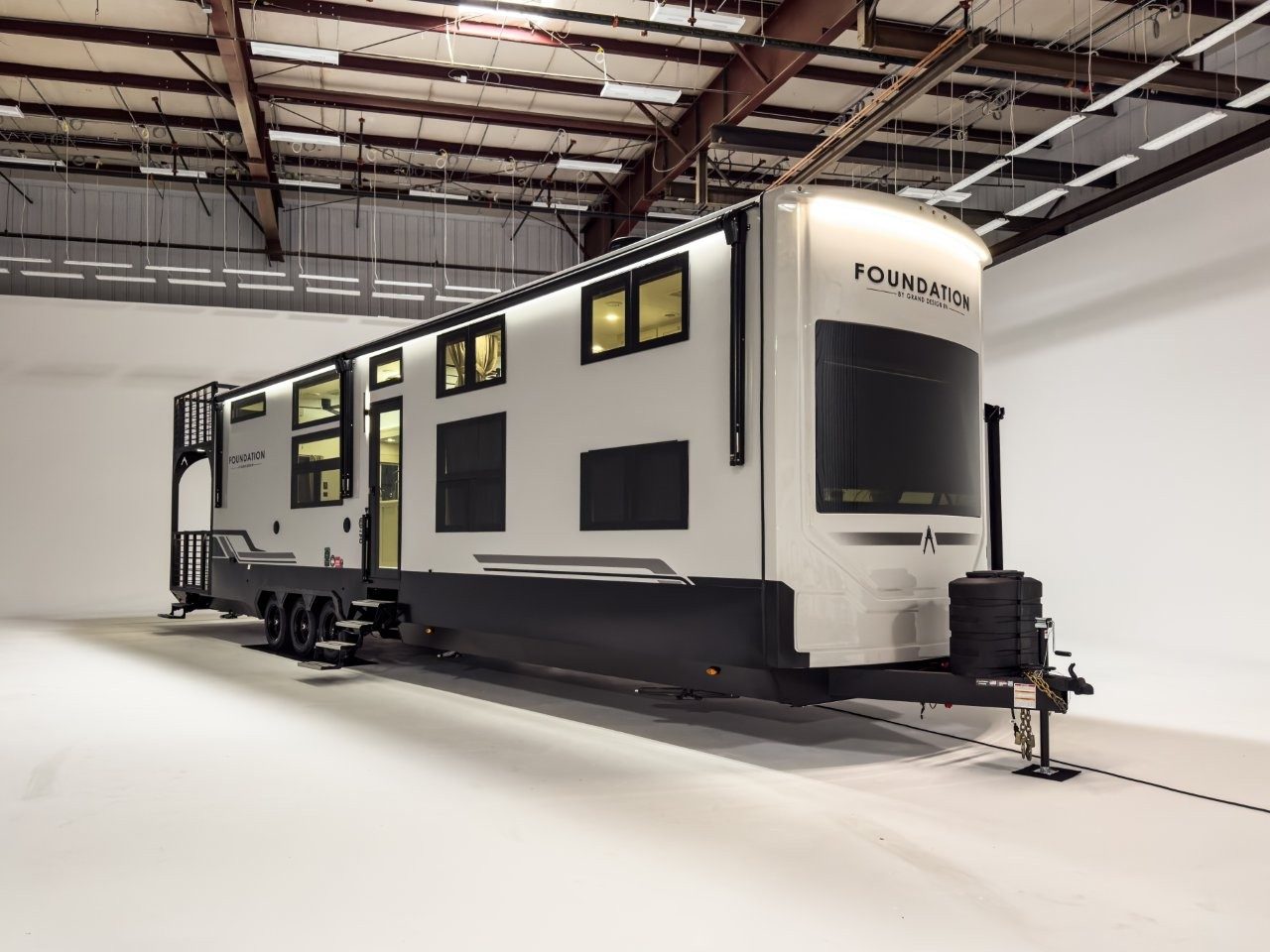
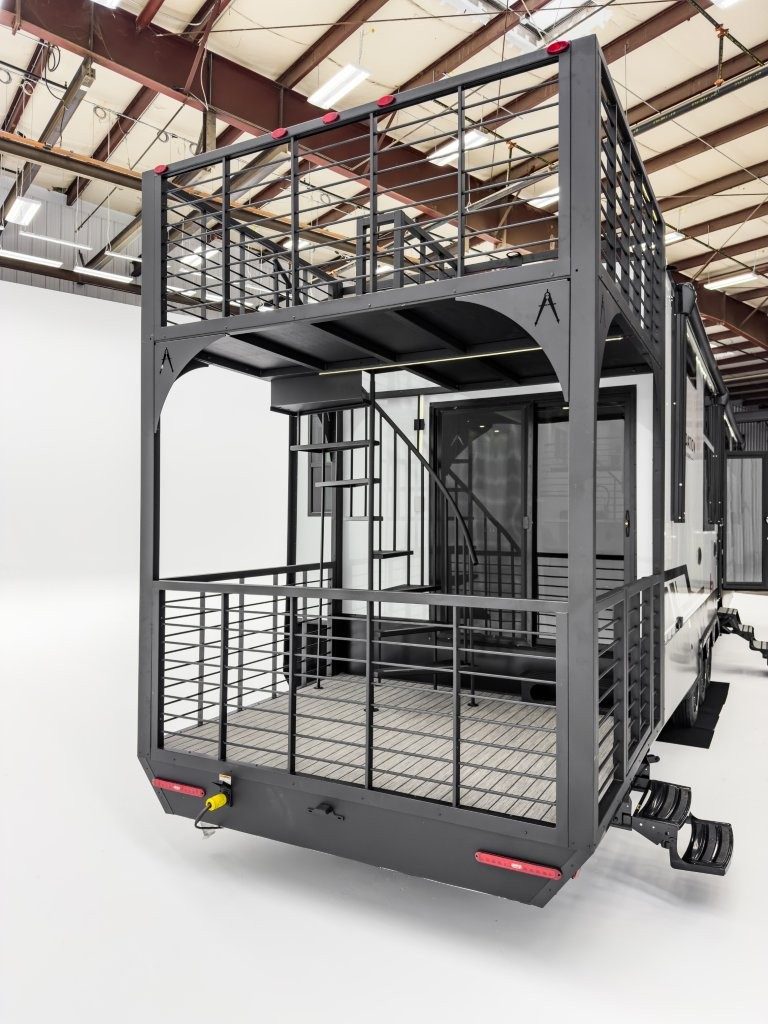
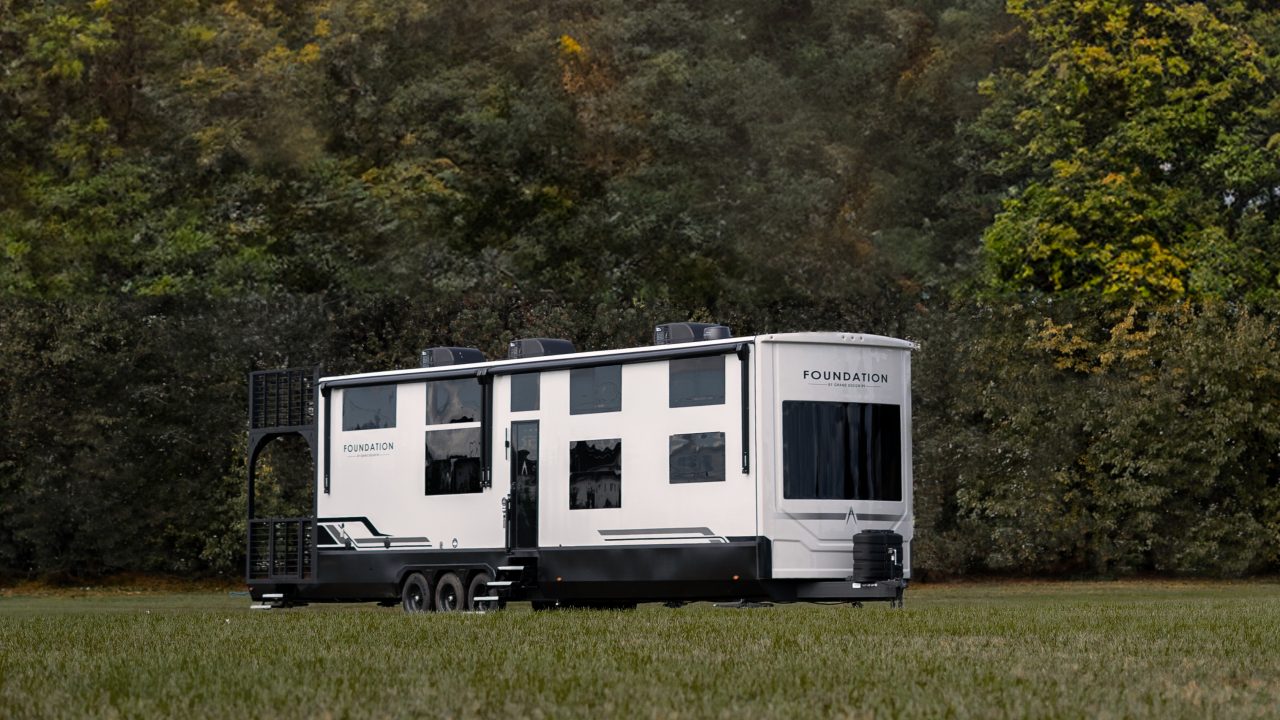
When considering semi-permanent or seasonal RV living, two terms frequently surface: park model RVs and destination trailers. While these categories share similarities and are sometimes used interchangeably, they represent distinctly different approaches to extended-stay recreational vehicle living. Understanding these differences becomes especially important when evaluating innovative new offerings like the Grand Design Foundation 42GD — the company's groundbreaking entry into the destination trailer market featuring the industry's first rear elevated observation deck.
When considering semi-permanent or seasonal RV living, two terms frequently surface: park model RVs and destination trailers. While these categories share similarities and are sometimes used interchangeably, they represent distinctly different approaches to extended-stay recreational vehicle living. Understanding these differences becomes especially important when evaluating innovative new offerings like the Grand Design Foundation 42GD — the company's groundbreaking entry into the destination trailer market featuring the industry's first rear elevated observation deck.
What Is a Park Model RV?
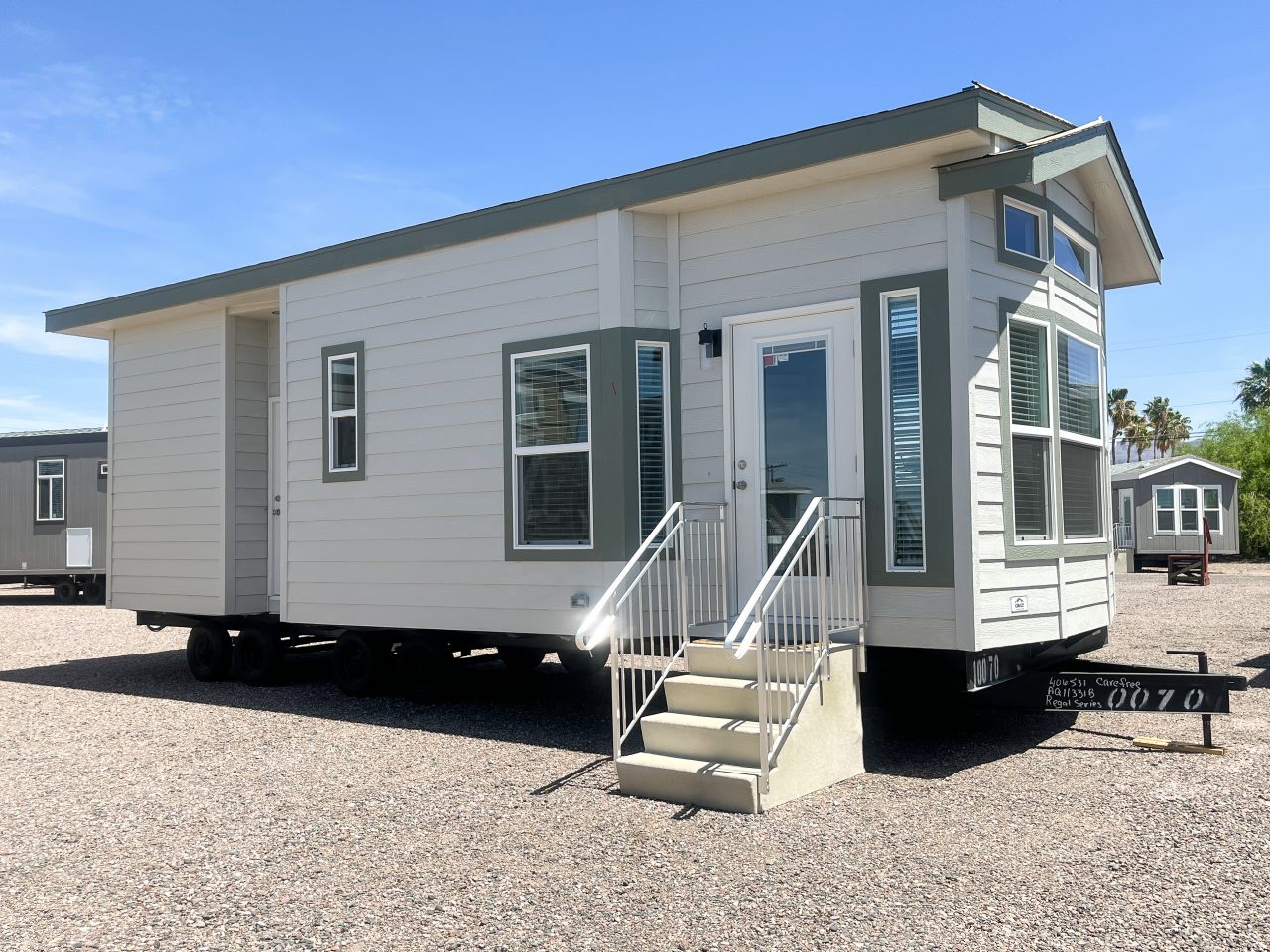
Park model RVs are compact structures built to ANSI 119.5 residential standards rather than RVIA recreational vehicle standards, typically offering up to 400 square feet of interior living space. These units are designed to resemble real homes with cottage-style or tiny home aesthetics, featuring peaked residential shingled roofs and composite siding rather than typical RV materials. Park models connect directly to residential utilities and lack standard RV holding tanks for waste water, requiring permanent connections to water, electrical, and sewer systems. This design philosophy reflects their intended purpose as semi-permanent structures meant to remain in one location for extended periods or even year-round living in suitable climates. Because park models often exceed the standard road-legal width of 8.5 feet (some reaching 11-13 feet wide), they require commercial vehicle transportation and special permits for delivery. Once positioned, many owners remove and store the hitch assembly, essentially treating the park model as a permanent tiny home at their chosen location.
Park models have gained popularity for several applications including short-term rentals, Airbnb properties, campground accommodations, vacation homes, and secondary residences on private land. Their residential appearance and construction make them particularly attractive for situations where homelike aesthetics matter more than mobility.
What Is a Destination Trailer?
Destination trailers represent a different category entirely, built specifically for RV enthusiasts who prioritize extended stays over frequent travel. These units are constructed to RVIA standards, limited to a maximum width of 102 inches (8.5 feet), and feature self-contained systems including holding tanks that allow them to function when not connected to full hookups. Destination trailers feature taller profiles than standard travel trailers with ceiling heights around 82 inches, large bay or floor-to-ceiling windows, and sometimes home-like sliding glass doors or French doors.
The key distinction lies in their self-sufficiency and mobility balance. Destination trailers maintain RV functionality with black and gray water holding tanks, allowing owners to relocate seasonally or move between different locations without requiring residential utility connections at each stop. They feature typical RV roofing materials and aluminum or fiberglass siding rather than residential construction.
Destination trailers excel for snowbirds who migrate seasonally, retirees establishing seasonal residences, or families who've found their perfect campground location but want the flexibility to relocate if circumstances change. They provide significantly more space and residential-quality amenities than standard travel trailers while remaining mobile enough for periodic relocation.
The Grand Design Foundation 42GD: Redefining Destination Trailers
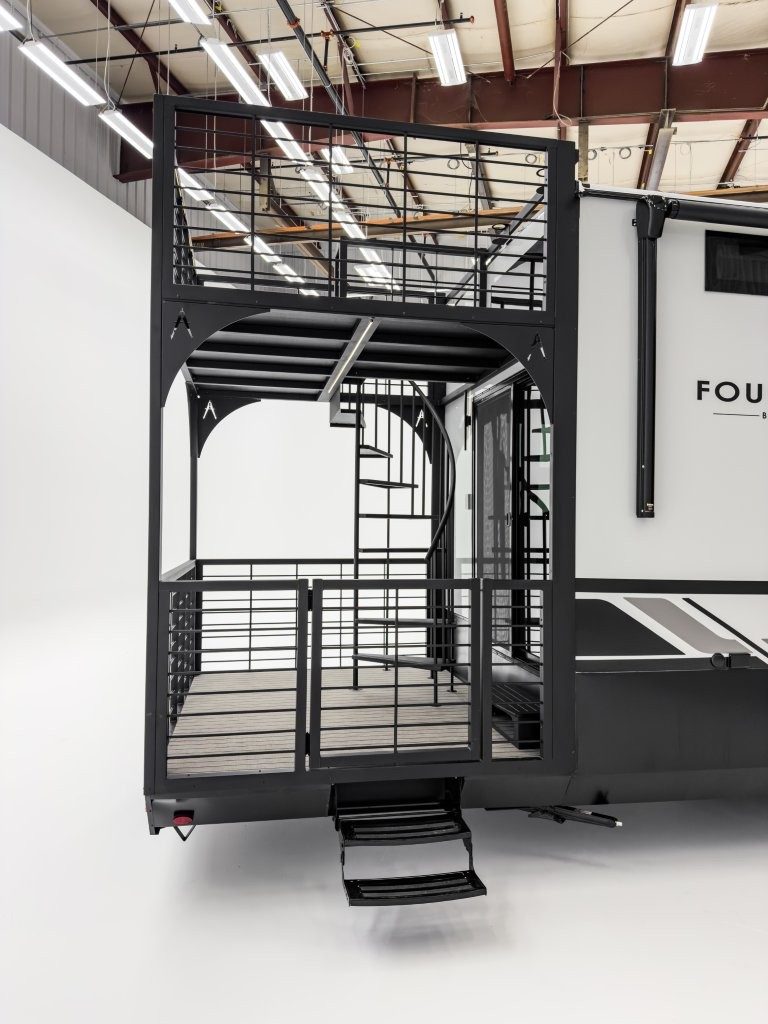
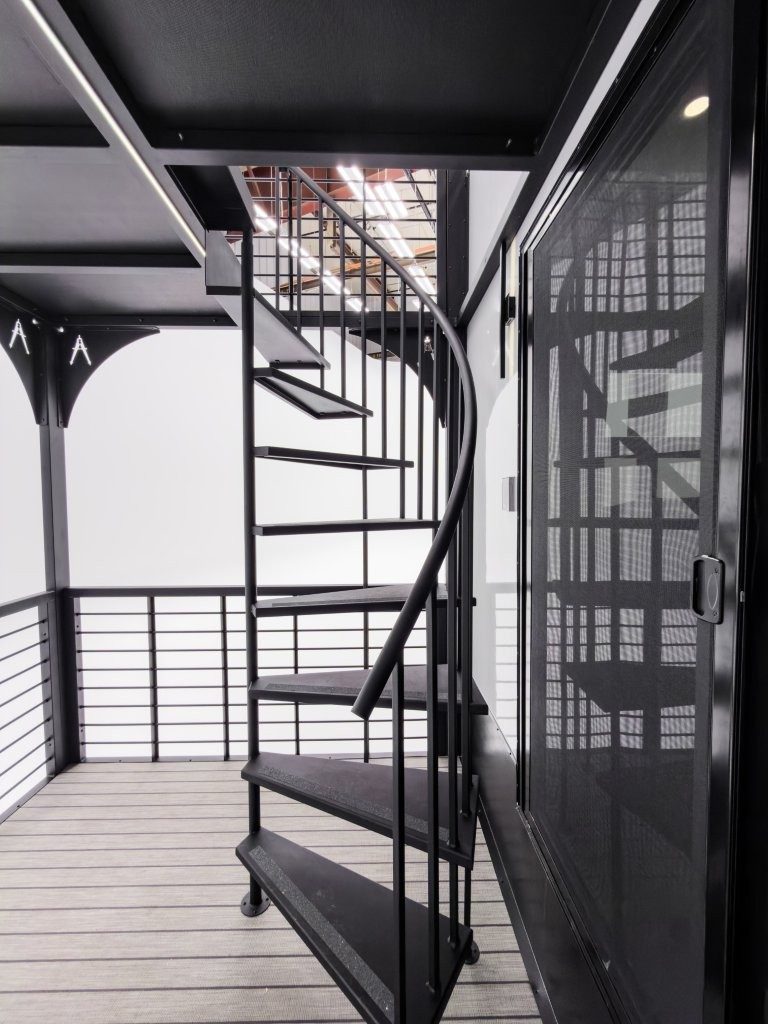
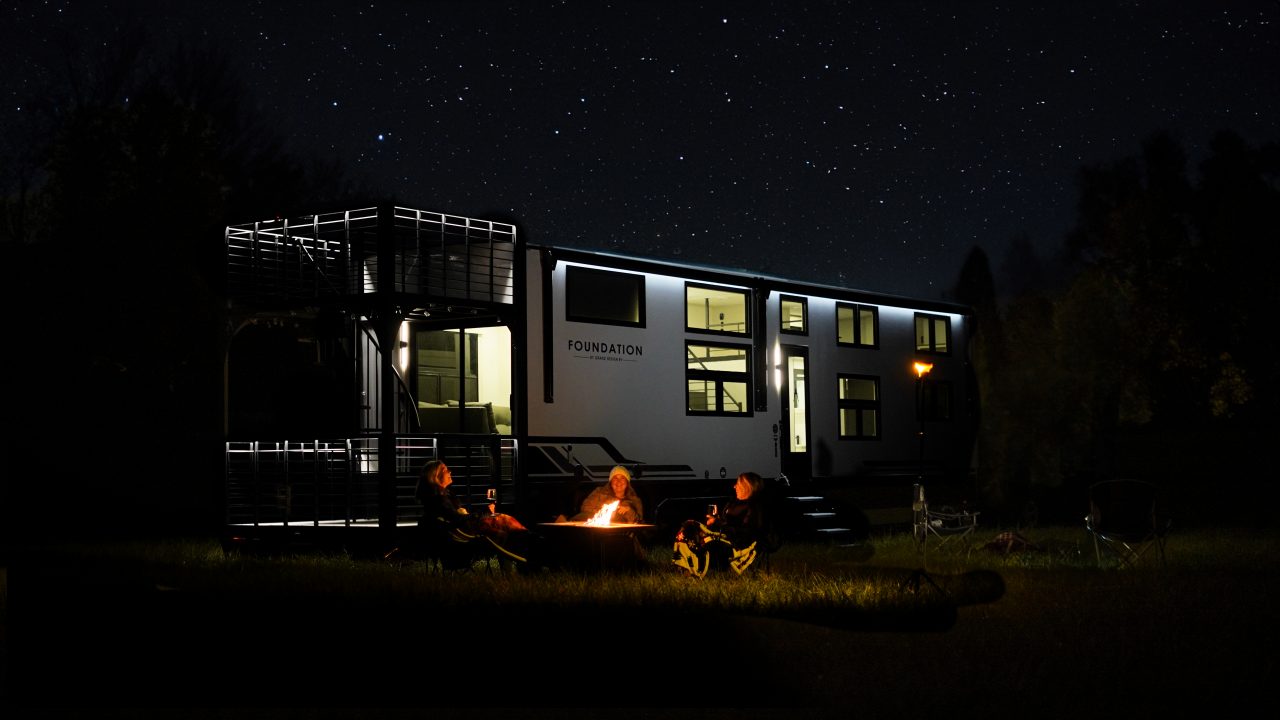
Grand Design's entry into the destination trailer market represents a significant evolution in this category. The Foundation 42GD combines the extended-stay comfort that destination trailers are known for with innovative features that set new industry standards. The 42GD's most distinctive feature is the industry's first rear elevated observation deck—a two-level outdoor living space that fundamentally changes how you experience your destination. The lower deck provides protected outdoor space perfect for rainy days or shaded afternoon relaxation, while the upper observation deck offers elevated views of your surroundings, whether overlooking lakes, countryside, or campground landscapes.
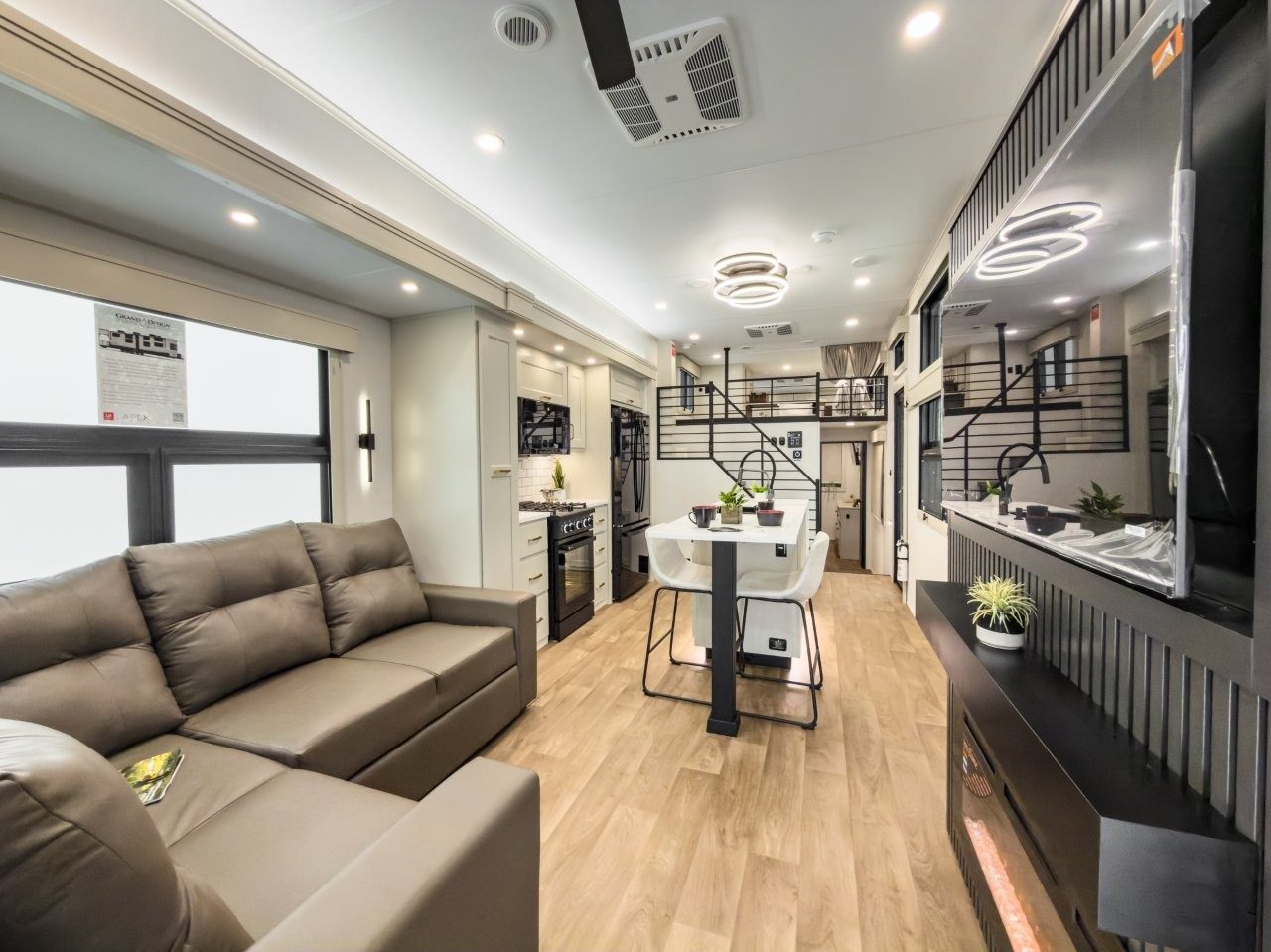
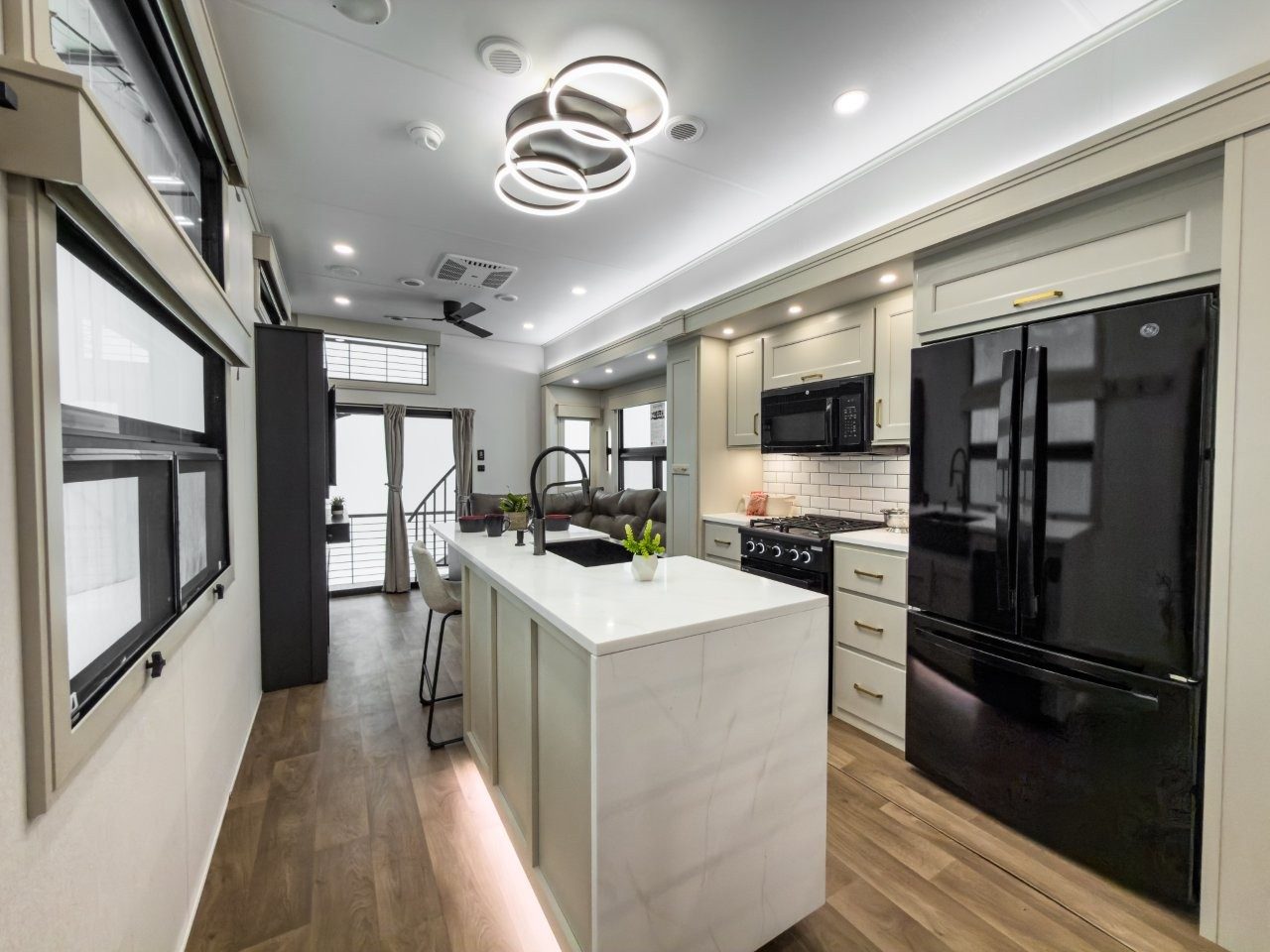
Inside, the Foundation 42GD delivers residential-quality living spaces designed for genuine extended stays. The heart of the unit is a magnificent island kitchen featuring a waterfall-style countertop edge with LED lighting underneath, providing ample bar seating for family gathering and entertainment. The four-burner range with large oven handles serious cooking demands, while the full-size residential refrigerator with double-drawer freezer and ice maker provides home-level food storage capacity.
The kitchen includes thoughtful details rarely found in RVs: a dishwasher for easy cleanup after family gatherings, pull-out pantry storage that includes shelf liners, a paper towel holder, and built-in spice rack, pull-out trash can storage, and innovative electronics drawers with standard outlets plus USB and USB-C charging ports. Solid surface countertops extend throughout, with additional storage in three-drawer configurations and hidden pull-out compartments.
The 42GD's living spaces prioritize both comfort and versatility. An L-shaped sectional with a built- in trundle bed in the rear lounge accommodates the entire family for movie nights or game days while also offering additional sleeping space, positioned perfectly in front of the electric fireplace and entertainment center. The paneled campsite wall adds visual appeal while concealing additional storage behind the TV, accessible through easy pull knobs rather than awkward foot pedals.
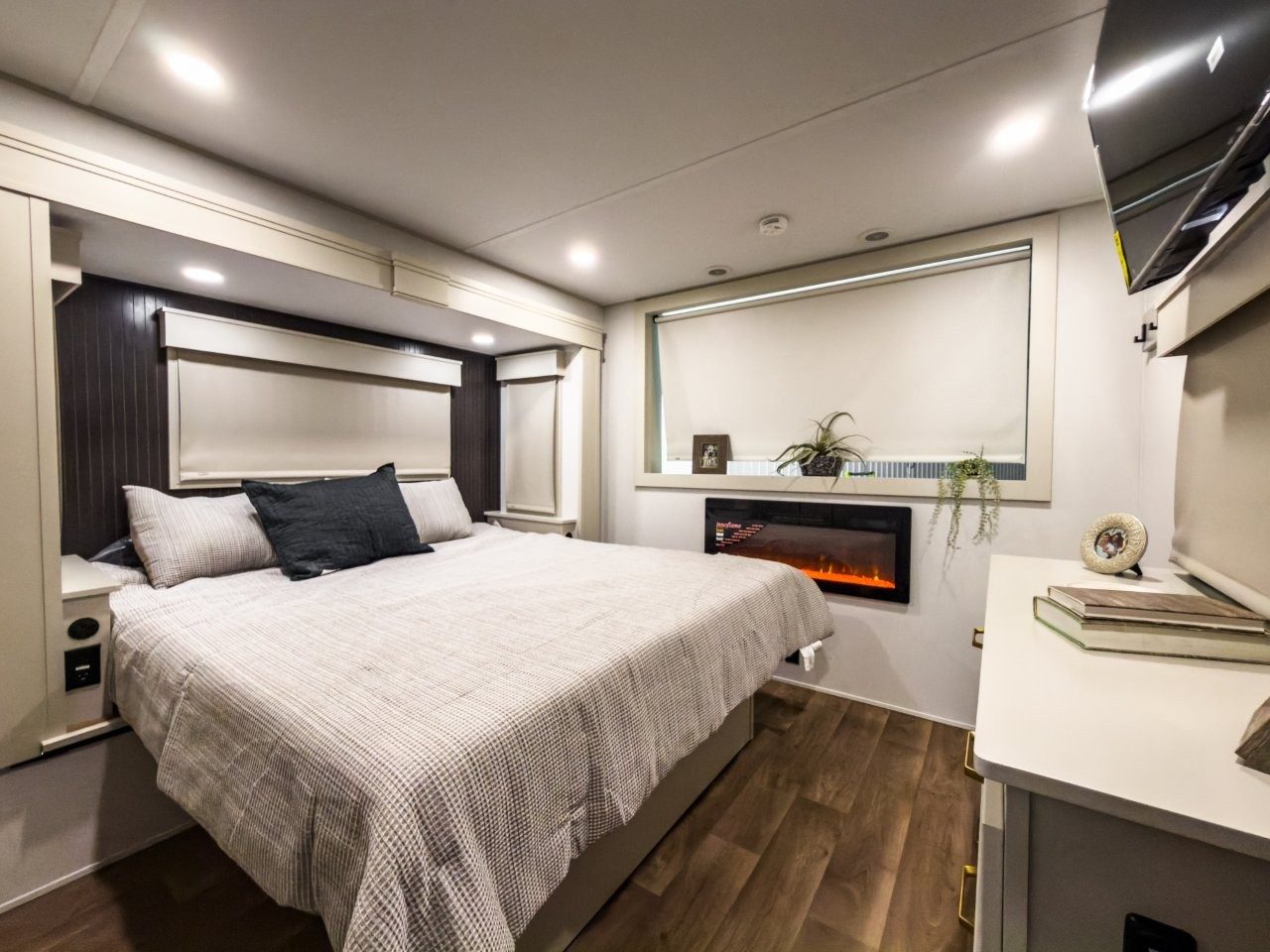
The bedroom suite provides true residential comfort with a king-size bed positioned in a slide-out for maximum space, surrounded by windows for natural light and views. An electric fireplace adds ambiance for cozy evenings, while a mounted TV offers direct viewing from the bed. Below, a four-drawer chest provides clothing storage alongside convenient cubby compartments. Practical amenities include a full-size wardrobe with hanging space and drawers, plus washer and dryer hookups for extended-stay laundry convenience. The main bathroom features a spacious walk-in shower with full fiberglass surround, corner shelving, body sprayers, handheld shower wand, and glass enclosure doors. Solid surface countertops, an undermount stainless steel sink, Fogatti water heater with convenient wall-mounted controls, and a porcelain foot-flush toilet complete the residential bathroom experience.
Perhaps most innovative is the Foundation 42GD's expansive loft area — a feature that transforms this destination trailer into a true multi-generational living space. Accessed by accommodating stairs with ample headroom, the loft extends nearly half the unit's length, creating what feels like an additional floor. This space includes a sunken desk where children can color or work comfortably while sitting upright, multiple sleeping areas including a full double mattress and additional twin-size sleeping surfaces, a wall-mounted TV with dedicated climate control via a separate air conditioner with proper ducting, and extensive storage through cupboards reaching floor level plus nightstands with cubbies.
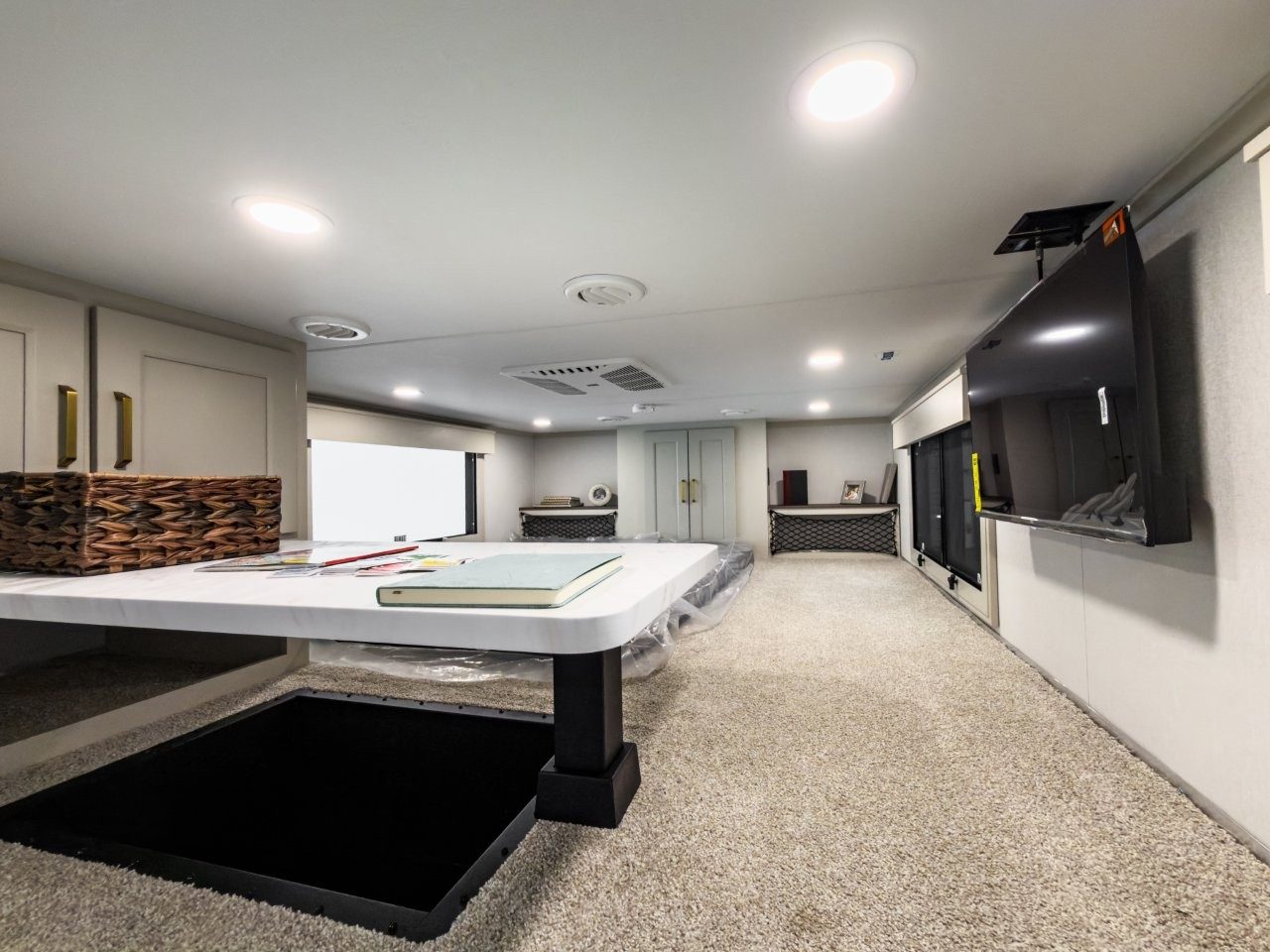
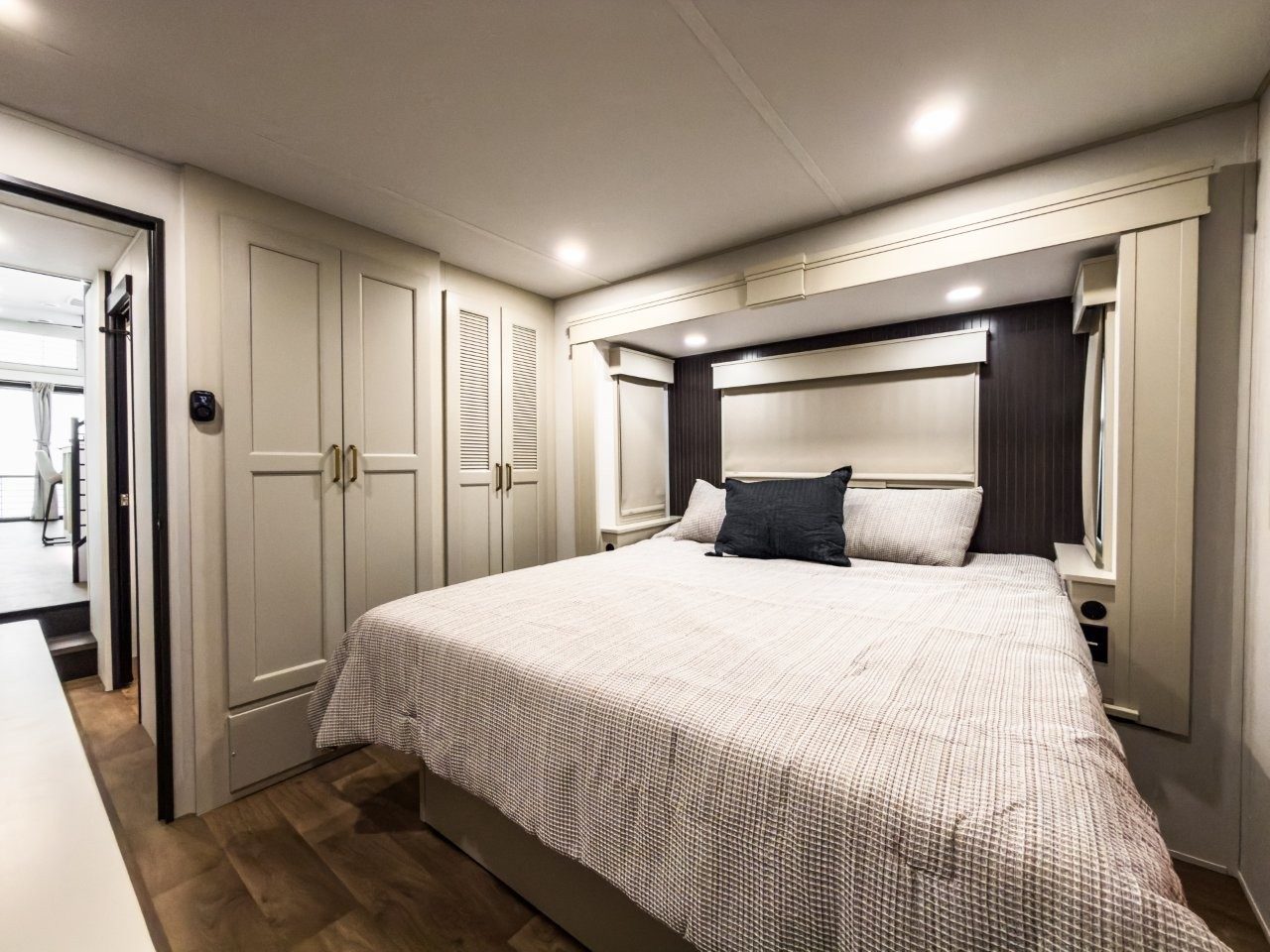
Climate control throughout the Foundation 42GD includes three roof-mounted air conditioners with integrated heat pumps, furnace heating, fan LED lighting, and strategically placed vents ensuring comfort in all seasons. Large windows throughout maximize natural light and views while remote-controlled night shades provide privacy and light control at the touch of a button.
Grand Design's attention to construction quality shines through details like the one-piece fiberglass roof over a composite substrate that eliminates potential leak points and requires minimal maintenance, 3 stage water filtration system, brass plumbed fittings, water shut off valves, residential-style hinges on cabinet doors, solid wood drawer construction with European-style glides for smooth operation and weight support, and full ducting systems for efficient climate distribution.
Two super-large awnings cover the entire unit's exterior, providing shade and weather protection for outdoor living. The split-level rear observation deck features safety railings with a gate accessing the lower level, creating distinct outdoor zones for different activities or age groups—teenagers might claim the upper deck while adults relax below, all within sight and earshot yet with comfortable separation.
Key Differences Between Park Models and Destination Trailers
Building Standards and Certifications
Destination trailers are built to RVIA standards and do not meet residential zoning requirements, while park models are built to residential ANSI standards rather than RVIA certification. This fundamental difference affects where each can be placed, how they're insured, and what building codes they must satisfy.
The Foundation 42GD's RVIA certification means it qualifies for RV financing, can be placed in RV parks and campgrounds nationwide, and maintains the regulatory flexibility that recreational vehicles enjoy. Park models, despite their superior insulation and residential construction, face more restrictive zoning limitations and may not be permitted in locations where RVs are allowed.
Size and Mobility Constraints
Park models can measure 11-13 feet wide but cannot exceed 399 square feet of floor area, while destination trailers are limited to 102 inches (8.5 feet) maximum width. Destination trailers typically have a GVWR around 14,000-16,000 pounds and can be towed by three-quarter-ton or one-ton trucks, whereas park models require commercial haulers due to their width.
The Foundation 42GD's adherence to destination trailer width standards means it can be relocated by properly equipped consumer vehicles without commercial transportation requirements. While not designed for frequent travel like a standard travel trailer, this mobility provides valuable flexibility for seasonal moves or relocation to a different favorite destination.
Tank Systems and Utility Requirements
The most practical difference is that park models lack holding tanks and must connect permanently to residential utilities, while destination trailers include self-contained black and gray water tanks. This distinction fundamentally affects where and how you can use each type.
The Foundation 42GD includes full RV holding tank systems, allowing it to function in campgrounds with partial hookups or even for short periods without any connections. This self-sufficiency means you're not tethered to locations with full residential utility availability, expanding your campground and destination options significantly.
Exterior Appearance and Construction
Park models feature typical peaked residential shingled roofs and residential composite siding, while destination trailers have typical RV roofing materials and aluminum or fiberglass sides. Park models are intentionally designed to resemble tiny homes or cozy cottages rather than RVs.
The Foundation 42GD embraces its identity as an elevated destination trailer while incorporating residential-quality materials where they enhance durability and aesthetics. The one-piece fiberglass roof provides superior weather protection compared to traditional RV roofing while maintaining the unit's towable design and RVIA certification.
Slide-Out Configurations
Park models do not have slide-outs, maximizing their 400-square-foot footprint through width rather than expandability, while destination trailers may have numerous slides to increase interior space when stationary. The Foundation 42GD utilizes slide-outs strategically to expand living areas when parked, then retracts for safe transport when relocation is necessary.
Intended Use and Lifestyle Fit
Park models suit situations where permanent or year-round placement is the goal, such as owned campground lots, private land development, or investment rental properties. Their residential construction and aesthetics make them ideal when you want a tiny home that happens to have wheels for initial delivery rather than a recreational vehicle for periodic relocation.
Destination trailers like the Foundation 42GD target a different lifestyle: extended seasonal stays with periodic relocation capability. Snowbirds who spend six months in Florida and six months up north, families who've found their favorite campground but want flexibility to explore other destinations occasionally, or retirees establishing a seasonal base while maintaining the option to relocate represent the destination trailer demographic. The Foundation 42GD's innovative features—particularly the elevated observation deck and expansive loft—make it especially appealing for multi-generational family use. Grandparents can maintain their privacy in the master suite while grandchildren enjoy their own loft space. The split-level deck creates separate zones where teenagers can gather independently while still being supervised from the lower level.
Investment and Value Considerations
Both park models and destination trailers can experience less steep depreciation than mobile RVs when well-maintained and located in desirable parks or resorts. However, the specific value proposition differs between these categories. Park models often command higher initial purchase prices due to their residential-grade construction and materials but may face restrictions on where they can be placed and challenges with relocation costs if you need to move. Their value retention depends heavily on location quality and the real estate market for the specific park or property.
Destination trailers typically represent a middle ground between travel trailers and park models in both price and value retention. The Foundation 42GD's innovative features—particularly the industry-first observation deck—position it as a premium option within the destination trailer category, likely commanding strong resale value among buyers seeking unique capabilities and multi-generational accommodation. The Foundation 42GD's ability to relocate means you're not permanently committed to a single location or property. If your favorite campground changes management, if you discover a more appealing destination, or if life circumstances require relocation, the investment moves with you rather than being tied to a specific piece of land.
Financing and Insurance Differences
Financing options differ significantly between park models and destination trailers. Park models are often eligible for loans similar to RV or small-home financing depending on lender and placement, while destination trailers are typically financed like RVs with potentially shorter loan terms and different interest rates. The Foundation 42GD's RVIA certification qualifies it for standard RV financing through numerous lenders familiar with destination trailer products. Insurance similarly follows RV policies rather than requiring specialized park model or manufactured home coverage, often providing broader protection and more competitive rates.
Making Your Decision: Park Model or Destination Trailer?
Choosing between a park model and a destination trailer depends on several key factors. Consider your mobility needs first: if you anticipate remaining in one location indefinitely with no plans to relocate, a park model's residential construction and aesthetics may justify its limitations. However, if you value the flexibility to relocate seasonally or explore different favorite destinations over time, a destination trailer like the Foundation 42GD preserves your options while still providing extended-stay comfort.
Evaluate your intended placement location carefully. If you own land where residential structures are permitted but RVs face restrictions, a park model may be your only option. Conversely, if you're targeting RV parks, campgrounds, or resorts, a destination trailer provides broader acceptance and simpler setup.
Consider your usage patterns realistically. Park models excel for year-round living in suitable climates or as permanent vacation properties that you visit regularly but never relocate. Destination trailers shine for seasonal living, snowbird migration patterns, or situations where you want extended stays measured in months but may or may not anticipate relocating at least once or twice annually.
The Foundation 42GD specifically targets families and multi-generational groups seeking destination trailer mobility with exceptional space and innovative features. If your extended-stay plans include grandchildren, visiting family, or situations where distinct living zones for different ages would enhance everyone's experience, the loft and observation deck features provide capabilities that neither standard destination trailers nor park models typically offer. Budget considerations should encompass not just purchase price but ongoing costs and potential resale value. Park models may offer lower utility costs due to better insulation but face potentially expensive relocation costs and limited resale markets. Destination trailers maintain broader resale appeal due to their relocatability and RVIA certification but may have higher heating and cooling costs depending on construction quality.
The Grand Design Advantage in Destination Trailers
Grand Design's entry into the destination trailer market brings decades of RV manufacturing expertise focused on quality construction, thoughtful design, and customer satisfaction. The Foundation 42GD reflects this philosophy through details that separate it from competing destination trailers.
The one-piece fiberglass roof eliminates the seams and potential leak points that plague many RVs over time, providing long-term weather protection that maintains structural integrity and prevents costly water damage. This design (which integrates automotive grade gaskets) also reduces the frequency and amount of maintenance typically required. Residential-style hardware, solid wood construction in cabinetry, and European-style drawer glides demonstrate attention to durability and daily usability.
The Foundation 42GD's layout maximizes functionality without wasted space. The island kitchen creates a natural gathering point that facilitates social interaction while keeping the cook engaged with family activities. The rear sectional lounge positions entertainment perfectly for group viewing while maintaining easy access to kitchen and bathroom facilities. The loft transforms otherwise-unused overhead space into valuable sleeping and activity areas that expand capacity without increasing the unit's footprint. Most significantly, the elevated observation deck introduces a completely new dimension to destination trailer living. This feature acknowledges that extended-stay RV living isn't just about the interior—outdoor living spaces matter enormously for quality of life during months-long stays. The two-level design creates distinct zones for different activities and age groups while providing elevated views that enhance the overall destination experience.
The Foundation 42GD represents Grand Design's commitment to innovation and understanding of what destination trailer owners actually need. Rather than simply repackaging existing destination trailer concepts, Grand Design identified opportunities to meaningfully enhance the extended-stay experience through thoughtful features that serve real lifestyle needs.
Frequently Asked Questions
A: The fundamental difference is that park models are built to residential ANSI 119.5 standards without holding tanks and must connect permanently to utilities, while destination trailers are built to RVIA RV standards with self-contained holding tank systems. Park models can be up to 13 feet wide and require commercial transport, whereas destination trailers are limited to 8.5 feet wide and can be towed by consumer three-quarter-ton or one-ton trucks. Park models resemble tiny homes with residential roofs and siding, while destination trailers maintain RV construction but with larger dimensions and residential-quality interiors designed for extended stationary stays.
A: The Foundation 42GD is a destination trailer designed primarily for extended stationary placement but maintains full mobility capability. It can be towed by a properly equipped one-ton truck, allowing for seasonal relocation or moves to different favorite destinations. However, unlike travel trailers optimized for frequent highway travel, destination trailers like the Foundation prioritize interior livability over aerodynamic efficiency and aren't intended for regular road trips. Most owners relocate their destination trailers once or twice per year for seasonal moves rather than weekly or monthly travel.
A: The Foundation 42GD features the industry's first rear elevated observation deck—a two-level outdoor living space unique in the destination trailer market. The lower deck provides protected outdoor space that remains usable during light rain thanks to the upper deck creating a ceiling overhead. The upper observation deck offers elevated views of your surroundings, perfect for morning coffee with lake views, watching sunsets, or keeping an eye on children or grandchildren playing in the campground below. The split-level design creates distinct outdoor zones that can accommodate different activities or age groups simultaneously, with teenagers gathering on the upper level while adults relax below, all within comfortable proximity yet with pleasant separation. Due to the composite floor substrate and woven vinyl flooring construction, both rear patio decks are also impervious to water.
A: Yes, the Foundation 42GD includes an expansive loft area accessed by full-size stairs with ample head room, extending nearly half the unit's length to create what feels like an additional floor. The loft features multiple sleeping areas including a full double mattress and additional twin-size sleeping surfaces, a sunken desk where children can sit upright to work or color, a wall-mounted TV with separate air conditioning and proper ducting, and extensive storage through floor-to-ceiling cupboards and nightstand cubbies. This loft transforms the Foundation into a true multi-generational destination trailer, providing dedicated space for children or grandchildren that keeps them close to family while giving everyone comfortable personal areas.
A: Yes, unlike park model RVs which require permanent utility connections, the Foundation 42GD includes complete RV holding tank systems for black water (toilet) and gray water (sinks and shower). This self-contained design allows the Foundation to function in campgrounds with partial hookups or even for limited periods without connections. The Foundation also comes standard with a solar scalability package that includes wiring for 600W of solar panels, wiring for a 30 AMP charge controller, and wiring for a 2000W inverter, allowing you the ability to add solar and function all 12V appliances and some 110V applications. You can use all bathroom and kitchen facilities while the tanks collect waste water, then dump tanks at designated dump stations or when connected to sewer hookups. This flexibility expands your campground options significantly compared to park models that can only be placed where full residential utility connections are available.
A: The Foundation 42GD is designed as a destination trailer for extended seasonal stays rather than year-round permanent living. While it includes residential-quality amenities like a full-size refrigerator, washer/dryer hookups, king-size bed, and proper insulation with two air conditioners and furnace heating, destination trailers built to RVIA standards generally have less insulation than park models built to residential codes. The Foundation can certainly be used comfortably for year-round living in moderate climates or with supplemental heating/cooling in extreme weather, and many owners do use destination trailers as their primary residence. However, if year-round living in harsh winter or extreme summer climates is your specific goal, you should carefully evaluate insulation specifications and potentially consider a park model built to residential thermal standards.
A: The Foundation 42GD's RVIA certification qualifies it for standard RV financing through numerous lenders, typically with loan terms similar to other recreational vehicles and interest rates competitive within the RV market. Insurance follows RV policies designed for destination trailers, often providing comprehensive coverage at competitive rates. This contrasts with park models, which may require specialized financing similar to manufactured homes or small property loans depending on placement, and insurance that might be structured more like property insurance than RV coverage. The Foundation's RVIA status generally makes financing and insurance simpler to arrange with more options available compared to park models, while also preserving your ability to relocate the unit if your situation changes, protecting your investment through maintained mobility.